

“Dances for the Price of a Cup of Coffee”
Tümay Kılınçel and Cornelius Schaper in conversation with Alexandra Wehrmann about their dance wish machine ‘kaleiDANCEscope,’ missing dances, and how a mini-stage in a caravan affects the audience.
– July 6, 2022
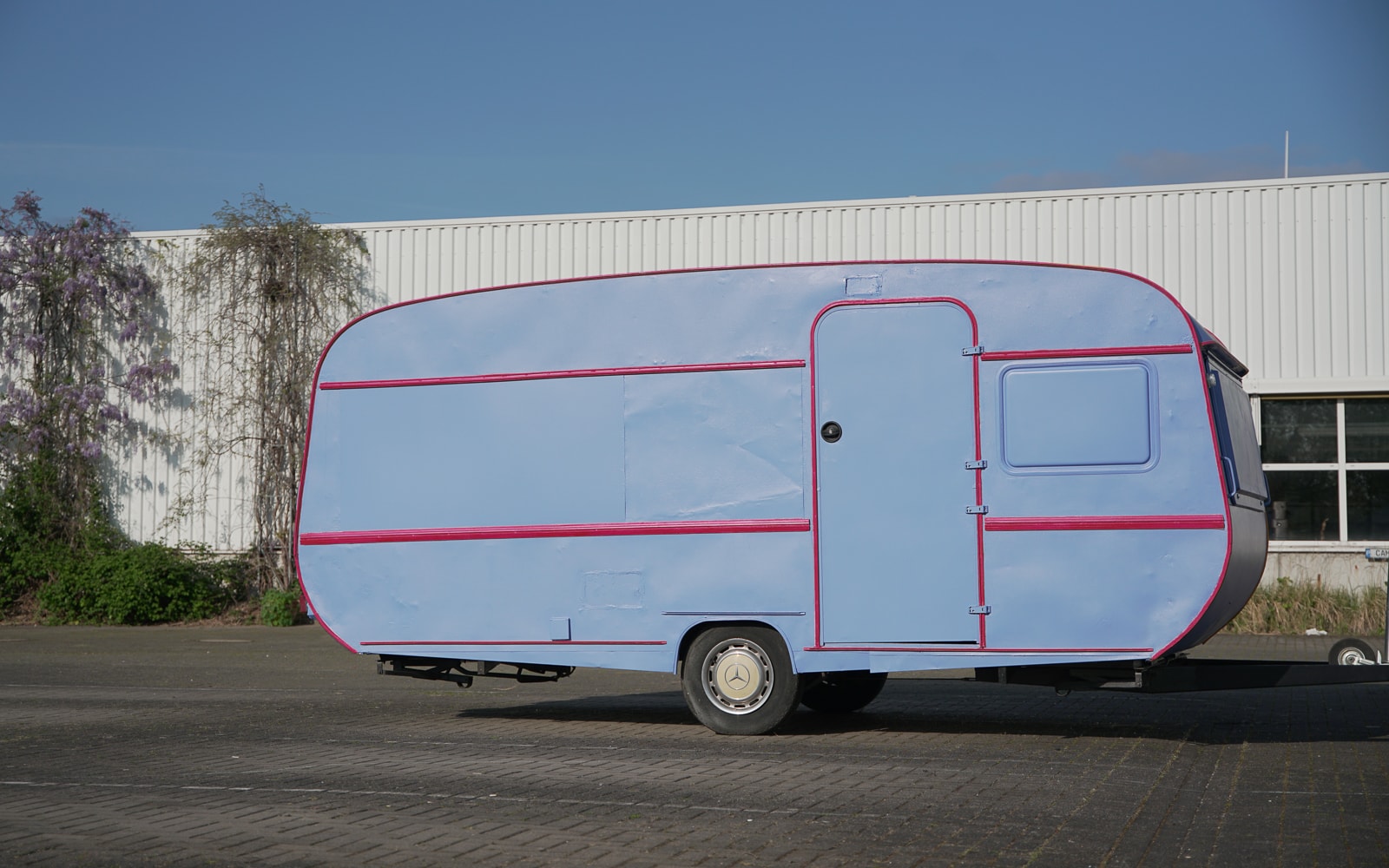
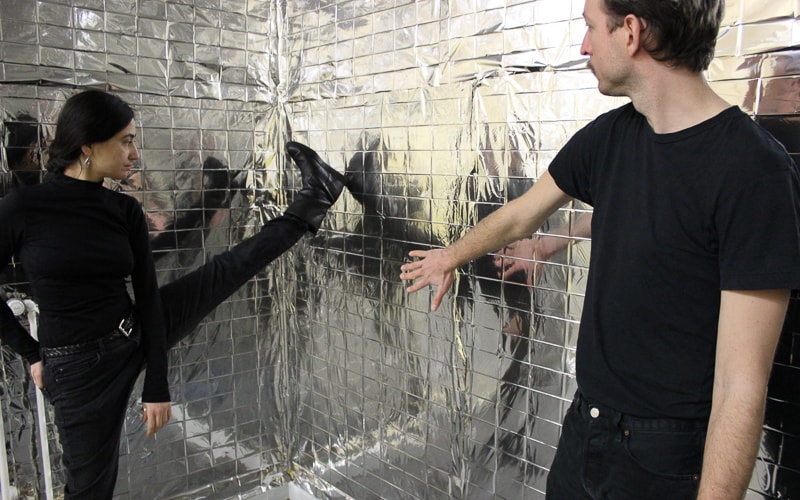
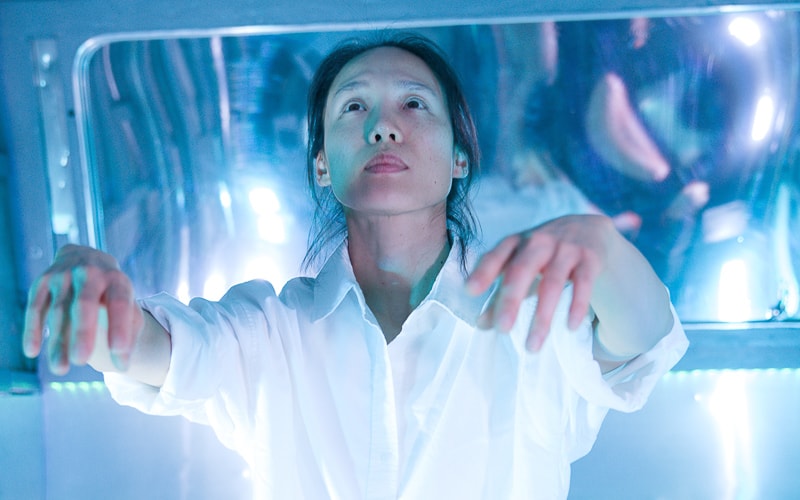
The collective “should-I-know” around Tümay Kılınçel and Cornelius Schaper is an association of various artists from the fields of performance, movement, media, and music. Kılınçel and Schaper live and work in Düsseldorf and have been developing joint projects since 2014. They reorganize, reinterpret, and subvert existing structures of public space, examining the interactions between inside and outside, private and public, and inclusion and exclusion. Until 2016, they toured Germany, Austria, and Switzerland with ›DANCE BOX‹ (2014), the prequel to ›kaleiDANCEscope‹. In 2020/21, they and Jungyun Bae were selected for the mentoring program of the NRW State Office for Independent Performing Arts.
You’re part of this year’s asphalt Festival with your collective “should-I-know.” Who is behind the name? And what are the backgrounds of the individual members?
Cornelius Schaper: We, Tümay Kılınçel and I, are should-I-know. We began our collaboration in Düsseldorf in 2013.
Tümay Kılınçel: Since then, in addition to our own artistic work, we have enjoyed working together as a duo.
Cornelius Schaper: I mainly work with video and performance. On the one hand, I create video installations, and on the other hand, I participate in various roles in performative works.
Tümay Kılınçel: I studied contemporary dance, context choreography, and performance in Berlin and Giessen. Since then, I have been doing various work on and offstage.
Cornelius Schaper: Of course, as should-I-know, we don’t do everything alone and have a network that supports us, without which most of our work would not be possible.
As part of the festival, you’ll be presenting your project kaleiDANCEscope on July 7, 8, and 9. It’s a dance wish machine. How exactly does it work?
Tümay Kılınçel: The dance request machine works similarly to a jukebox. The audience can choose a dance, which is then presented. What’s special about it is that it’s a one-on-one dance performance, meaning one dancer dances for one audience member.
Cornelius Schaper: At the same time, the dance request machine is an archive that is intended to grow continuously. Starting with the asphalt Festival, the kaleiDANCEscope begins collecting and archiving dances. The stage design and the performance venue are also special.
How did you select the dances available for selection? And how many are there?
Cornelius Schaper: At each venue, we invite new regional dancers to perform their dance repertoire for us. At the same time, there is also a permanent kaleiDANCEscope ensemble that always travels with the repertoire.
Tümay Kılınçel: The guest dancers and the dance ensemble also exchange their dances with each other. This way, something new is always emerging.
Ahead of the asphalt Festival, you visited local dance groups to discover special dances that are being performed in Düsseldorf. What did you discover during your research?
Cornelius Schaper: Düsseldorf offers many different dance forms: from Anatolian dance clubs to vogueing, hip-hop, contemporary dance, and even carnival clubs. There’s also something called Rhenish folk dance, although we couldn’t find anyone who still dances it. It was still nice to get to know everyone, as it gave us a better understanding of the Düsseldorf dance scene, especially beyond the big stages.
Tümay Kılınçel: The dancers now represented in the kaleiDANCEscope are a sample of the Düsseldorf scene. At the same time, they are the beginning of our growing archive of dances that kaleiDANCEscope is collecting along its journey.
Most artists want to reach as many viewers as possible with their work. Why did you choose a one-on-one performance? What appeals to you about it?
Cornelius Schaper: In a one-on-one performance, you’re closer to the action than on a large stage, where you sit far away from the action. This allows the audience to feel the dance performance more fully. It’s also a question of focus, because there’s no neighbor to distract you; you’re completely focused on the dancer.
Tümay Kılınçel: There may be fewer spectators, but the individual intensity means it reaches people more directly. It’s similar to a library, where you often deal with a subject alone, and it’s precisely through this isolation that a special concentration can develop.
The dances aren’t presented directly in public space, but on a miniature stage. How should we imagine it?
Tümay Kılınçel: The stage is a caravan and a sensory experience space. The audience should form their own impression and experience the space, which is why we don’t reveal too much in advance.
Cornelius Schaper: At the same time, we want to explore what it’s like to step out of public space into a kind of parallel world.
You’re performing at three different locations in Düsseldorf’s urban area. How did you choose them? What kind of audience do you want to appeal to?
Tümay Kılınçel: We’ve always wanted to be part of a market; you can choose and buy something here, too, namely dances for the price of a coffee. We’re also excited about the audiences that attend these venues. We believe they’re very diverse. After all, we’re playing at two weekly markets and a flea market.
Cornelius Schaper: At the same time, there will of course also be people who come to us specifically. But we actually want to address passersby and offer them something they wouldn’t have expected in this place.
In the environment you’ve already described, you’ll probably meet mostly people who have had little contact with this kind of culture. How do you try to keep the barriers low, especially in a one-on-one situation where, as a guest, you can’t hide in a group?
Cornelius Schaper: On average, a visit to kaleiDANCEscope lasts about three minutes, sometimes shorter, sometimes longer. A period of time that’s definitely worth investing in trying something new. And there’s a reception outside and people who are approachable.
Tümay Kılınçel: You can also linger outside and listen to, for example, the DJ set that was created especially for the festival. It takes courage to go into the caravan, but it’s worth it.
– – –
July 7, 13:00-18:00: Wochenmarkt Eller, Gertrudisplatz
July 8, 13:00-18:00: Rheinischer Bauernmarkt Unterbilk, Friedensplätzchen
July 9, 12:00-17:00: Trödelmarkt Aachener Platz, Ulenbergstr. 10
There are no advance tickets available for the ›kaleiDANCEscope‹ performances; admission on site costs €2.
– – –
This interview first appeared on Alexandra Wehrmann’s Düsseldorf blog theycallitkleinparis. Wehrmann works as a journalist for various media outlets and has been reporting on people who contribute to urban life in one way or another in her blog since 2015. Her book ›Oberbilk. Hinterm Bahnhof‹, which she published together with photographer Markus Luigs, was published in 2021.