

Keeping the Shop Running – Forced Labor in Düsseldorf and Germany
Author and dramaturge Juliane Hendes discusses the production “Endstation fern von hier”, artistic work in the context of historical reappraisal, and blind spots in the culture of remembrance.
– June 27, 2022
Following ›Schwarz-helle Nacht‹ (2019), ›Aktion:Aktion!‹ (2020), and ›Im Trial‹ (2021), ›Endstation fern von hier‹ concludes our ›Historification› cycle, in which we theatrically reappraised events of the National Socialist era in Düsseldorf. It concludes with a major challenge: How do you create documentary theater without documents?
The sources and accounts of contemporary witnesses for the previous projects were extensive, moving, and numerous. This enabled us to develop our plays responsibly and purposefully, using these documents. When it came to the topic of forced labor, the situation presented itself differently. Few eyewitness accounts were found in the archives and memorial sites, and those that were found tended to be very reserved in their assessment of their own fate. It was as if people weren’t allowed to denounce their own injustice. As if those affected, knowing the suffering of others, were relativizing their own. This raised the question for us as a collective: Why has the memory of the forced laborers of the Nazi regime never found its place in our culture of remembrance? And what needs to be remembered in this context?
Retrospective: Forced Labor in Düsseldorf and Germany
1941 – German soldiers march into the Soviet Union, besiege and plunder whatever they find, and conscript people – especially young people – into forced labor. “In the sequence of the attacks, the affected civilian population was first recruited, and when this didn’t elicit sufficient response, they were forced into forced labor in the German Reich,” says Joachim Schröder from the Alter Schlachthof memorial site. Together with Rafael R. Leissa, he has published a comprehensive study on the subject of forced labor in Düsseldorf and supported us with his knowledge during our work.
People came to Germany from all over Europe: “The fascist state consisted to a very large extent of forced labor. Many people were at the front or had already fallen. Without forced labor, Germany would have been impossible to organize,” Schröder continued.
For the companies, it was an economic consideration. To continue business, they needed employees, and they were no longer available through other means. “I am not aware of any cases in which a company refused to employ people simply because they were forced.”
People primarily came to Düsseldorf from Ukraine, as the recruitment districts were allocated accordingly. In this context, the former Gau capital is one city among many. The exact number of forced laborers is difficult to determine because the entire German economy was subject to some form of forced labor. Even German workers could not simply work wherever they wanted. In Düsseldorf, there were approximately 300 accommodations spread throughout the city, but not all of those affected lived in camps. Some also lived directly in the companies or in family homes. However, one can assume that the people were so numerous that they could not have remained hidden from anyone as part of the cityscape.
Racism and Continuity
“What is particularly striking when examining forced labor during the Nazi era is the continuity with which foreigners in Germany are viewed. The comparison with the so-called ‘guest workers’ of the 1950s and 1960s, for example, is obvious. They lived in ‘foreign workers’ camps,’ meaning they were also housed in barracks, were expected to keep to themselves, had significantly fewer rights, and had to do work that no one wanted to do, all while being paid less for it,” said Schröder.
And even today, precarious employment conditions for foreign workers continue to make headlines. The National Socialist regime established a hierarchy of nationalities, some of which persists to this day. According to its logic, people from Western countries (the Netherlands, for example) are also Germanic and thus ‘racially more valuable’ than, for example, people of Italian descent, who ranked below them in the hierarchy. The Slavic nations were classified under this category – they were considered working peoples and Bolshevik subhumans – and from the National Socialist perspective, the Jews, Sinti and Roma were the targets. “The whole thing was accompanied by typical Nazi bureaucracy – laws, even. People were deprived of their freedom, discriminated against, disenfranchised, and treated in a racist manner, and this was then couched in laws and regulations so that it somehow appeared legal,” Schröder reports as one of the results of his extensive research.
In total, more than 20 million people from across Europe suffered harm in the Third Reich, of which 13.5 million were foreign forced laborers, five million of whom came as Soviet prisoners. In total, more than 20 million people from across Europe suffered losses in the Third Reich, of which 13.5 million were foreign forced laborers, five million of whom came as Soviet so-called “Eastern Workers” (Russians, Ukrainians, Belarusians). They were on average 18 years old. Children were also used for labor. The former forced laborers had to wait for many years for compensation. It was not until 2000 that the “Remembrance, Responsibility and Future” Foundation was established and made compensation payments to those affected (from a total of ten billion DM, funded by payments from the federal government and the companies that benefited at the time). Civilian workers received 5,000 DM, concentration camp prisoners and ghetto internees 15,000 DM. Prisoners of war received nothing, as the law at the time permitted their use for forced labor. “The money certainly did something for people in the East.” At the same time, the sum is disproportionate to what was done to them,” Schröder states.
Who gives whom their voice? Who provides the impetus to take a closer look at other corners of historical reappraisal? And why are more than 20 million voices missing from our canon of memory? We, the theater collective Pièrre.Vers, have taken up the subtle impulses we encountered during our research, amplified them, and, above all, channeled them into one character: Valentina, whose story is one of these 20 million. She represents all the people whose stories have remained unheard to this day.
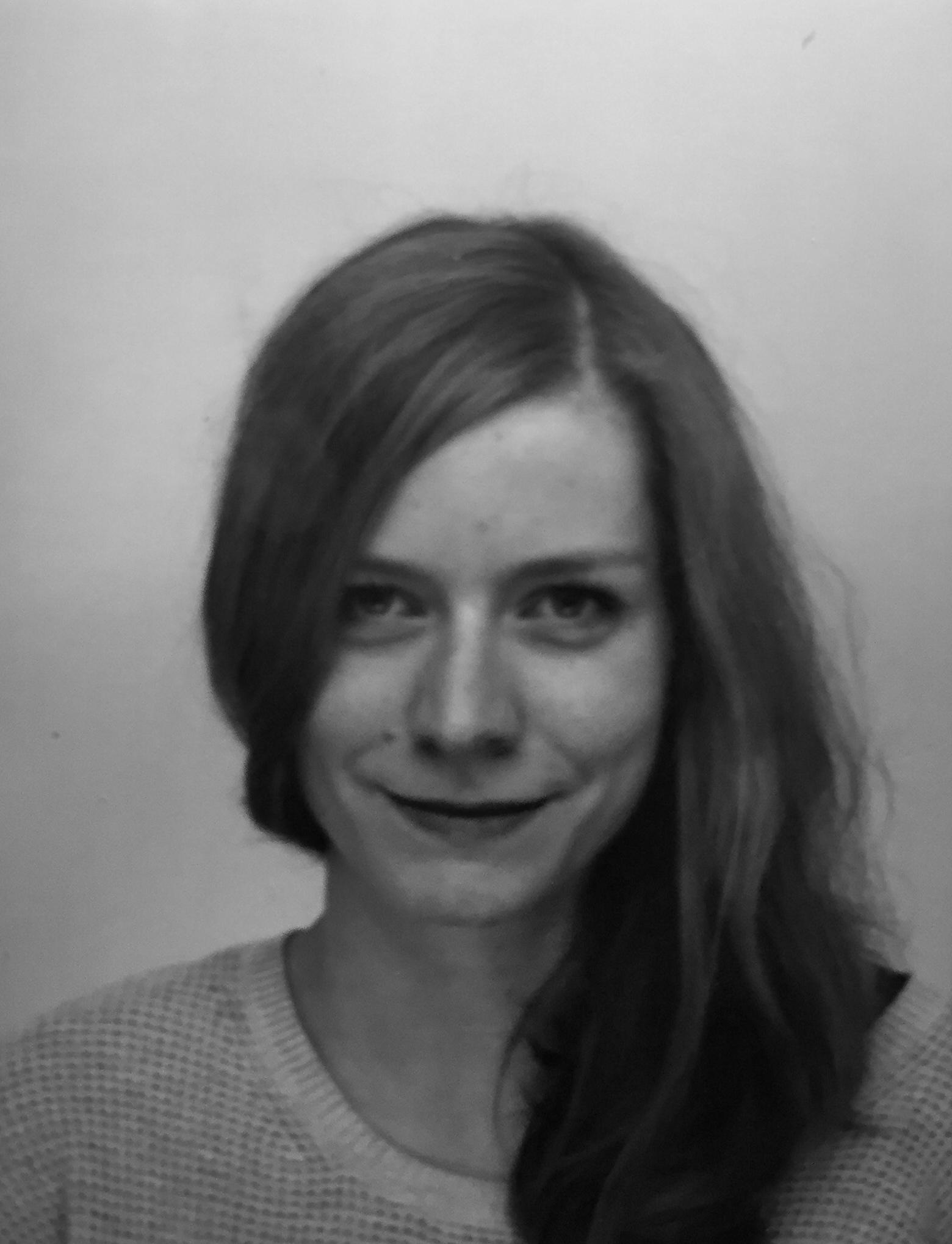
Juliane Hendes is an author and dramaturge, writing for theater, film, and radio plays. Born and raised in Rostock, she studied dramaturgy at the University of Music and Theater in Leipzig and subsequently worked as an assistant director at the Düsseldorf Schauspielhaus. Since 2016, she has been a freelance author and dramaturge, working at venues including the Sophiensäle Berlin, the Nationaltheater Mannheim, the Münchner Kammerspiele, and the Düsseldorf Schauspielhaus. As a writer, she is associated with the independent group Pièrre.Vers. In 2021, she was awarded the City of Düsseldorf’s Promotion Prize for Performing Arts. Since 2022, she has been part of ›rua. – Cooperative for Text and Direction‹.