

A building that forgets itself
The mixed-reality performance »AUFLÖSUNG. Ein virtueller Kontrollverlust« (»DISSOLUTION. A Virtual Loss of Control«) by the multi-award-winning artist duo DARUM offers a completely new performing arts experience. The audience experiences two-thirds of the production in virtual reality. How did the piece come about, and what can visitors expect? Five questions for Victoria Halper and Kai Krösche.
– 19 July 2026
What was the starting point for »AUFLÖSUNG«; what inspired you to choose this theme?
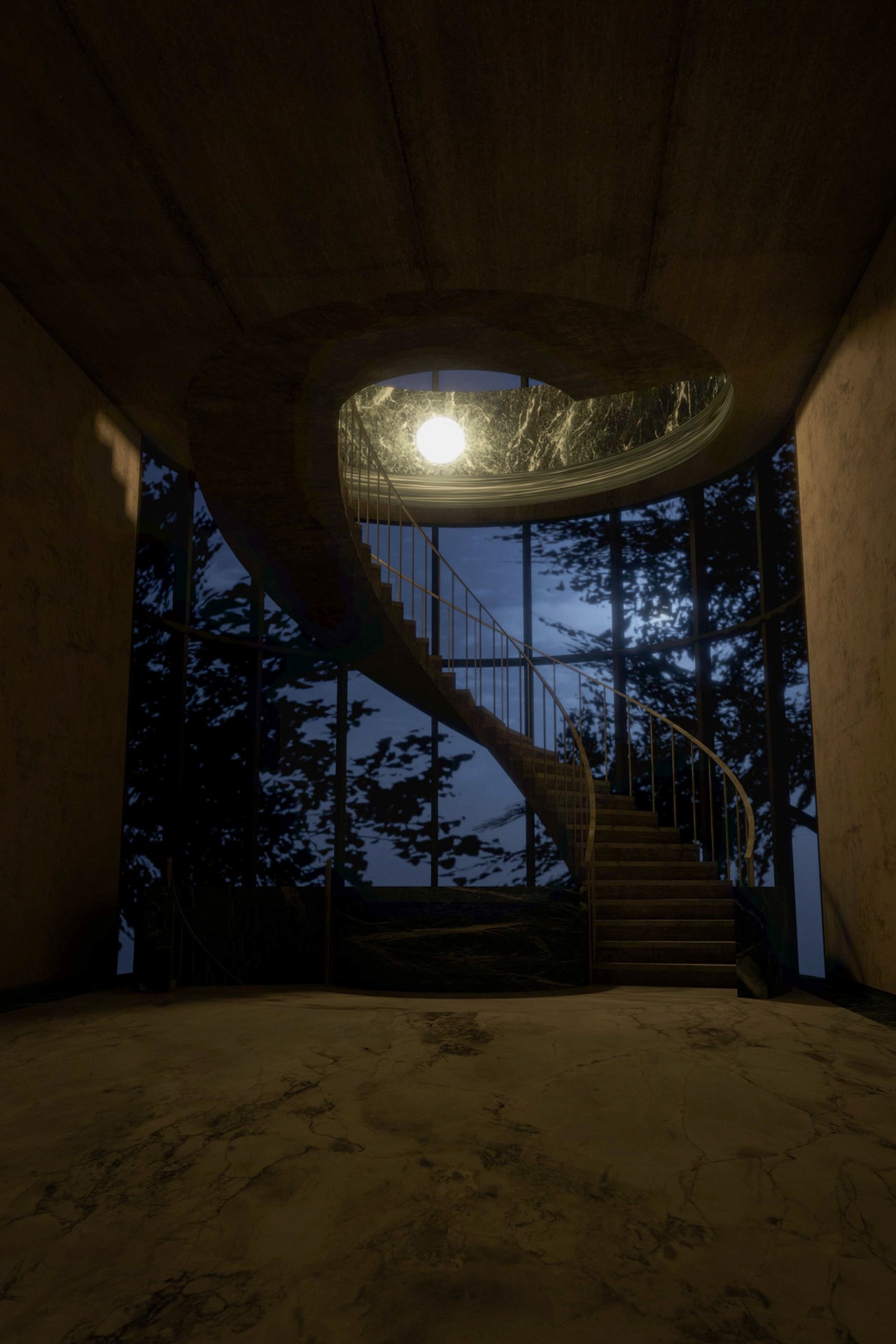
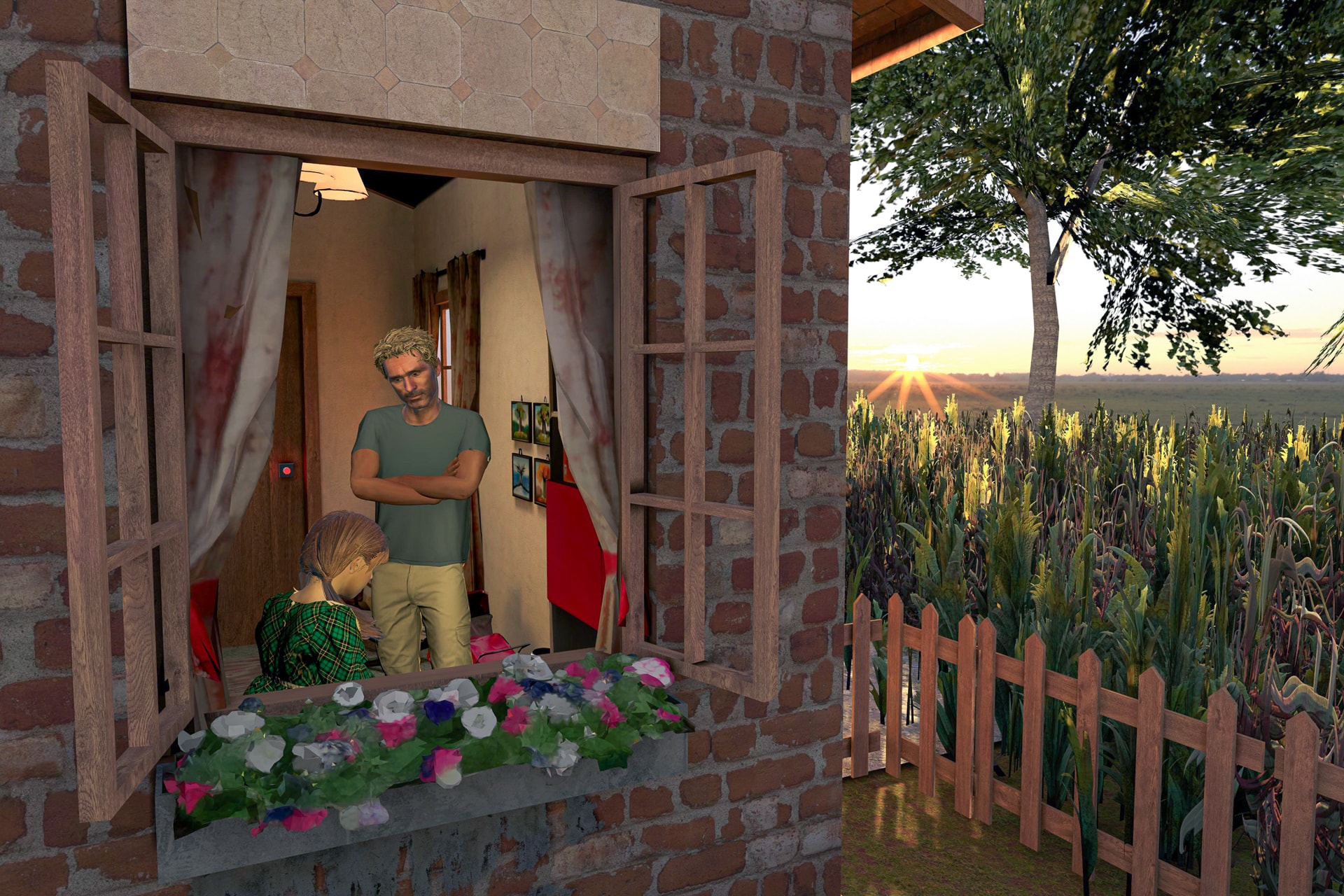
Whilst researching our play »Heimweh« (2022), we spoke to a historian from the commission that had previously documented the crimes committed against tens of thousands of children and young people in Austrian children’s homes. She mentioned in passing that the next major scandal of our time was, in all likelihood, lurking in the field of healthcare and care for the elderly. This statement stayed with us, which is why we decided to dedicate an evening to the – almost universally relevant – question of what it means to be dependent, at the end of one’s life, on the help and care of others, often strangers, whilst at the same time being at the mercy of a system that is increasingly overwhelmed and which, due to pressure on resources – particularly in the commercially oriented private sector – is coming to focus more on the administration of people than on the people themselves. It became clear early on that we wanted to approach the subject once again through virtual reality, in order to use its tools to artistically create a system that is also, architecturally speaking, in a state of disintegration.
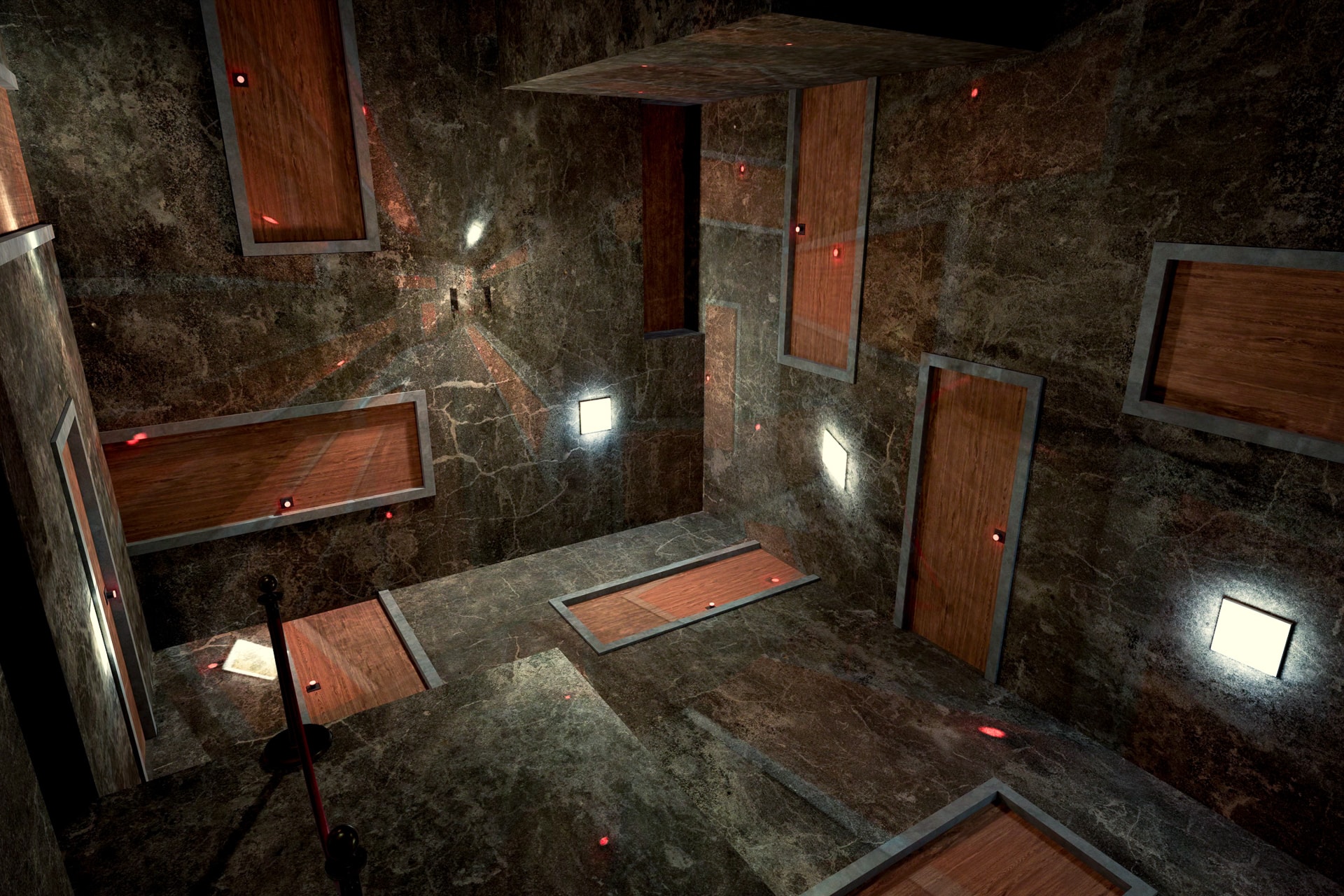
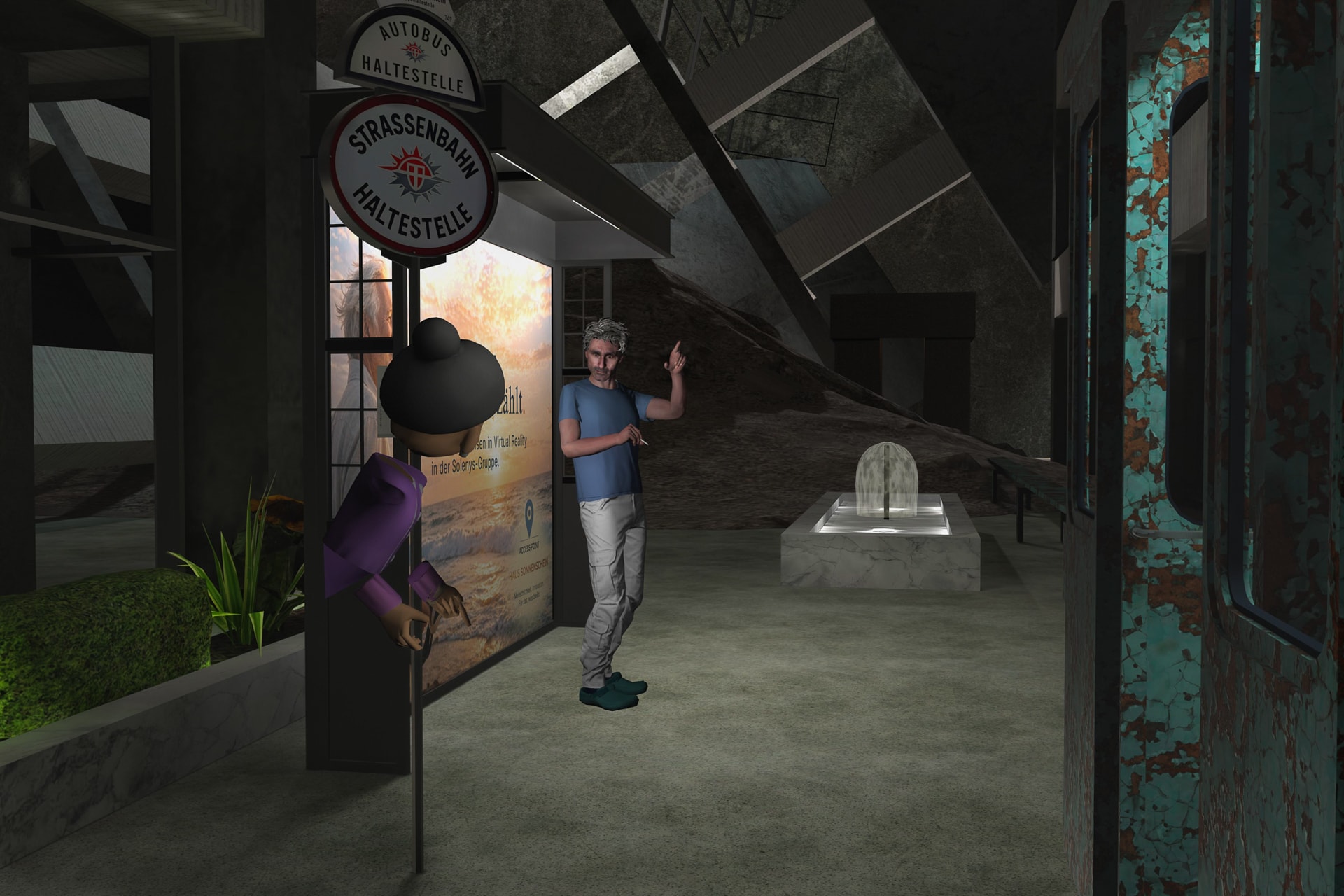
We were ultimately inspired by three things for this particular »story«: Firstly, articles about the sudden closures of private care homes, some of which were shut down overnight due to mismanagement and/or serious shortcomings – which in some cases meant that elderly people had to find an alternative care place within a very short space of time and under considerable pressure. Secondly, the fact that virtual reality is also increasingly being used in elderly care as part of so-called »biographical work«: an application which we, in principle, do not find problematic, but which naturally stands or falls on the quality of the urgently needed preparatory and follow-up support (the dystopian notion of people being »parked« in VR has stayed with us). Finally, the mechanisms of dementia, from which arose the idea of a »self-forgetting«, constantly changing building that forms the spatial setting for »AUFLÖSUNG«. Accordingly, the dramaturgy of the evening does not follow a linear structure, but functions in a more associative and deliberately fragmented manner.
»AUFLÖSUNG« straddles the boundaries between performance, installation, and virtual and mixed reality. What opportunities does this combination of media open up for your artistic work?
In our view, the immediacy and apparent »liveness« of virtual reality lend themselves well to integration with performative and installation-based elements. Specifically, virtual reality frees us from the spatial and budgetary constraints inherent even in the reality of the largest and best-funded theatres: setting aside the performance-related limitations of the hardware, the only limiting factor here is one’s own imagination. Furthermore, in our view, it is the logical medium if one wishes to explore the illusion of presence whilst actually being absent. After all, »AUFLÖSUNG« deals very much with mechanisms that suggest (human) closeness, but which are in fact outsourced to machines through automation – mechanisms that are, in fact, already being trialled to some extent in everyday care work.
Following »[EOL]. End of Life«, »AUFLÖSUNG« is your second VR project. What have you taken from your previous work, and what did you want to approach differently or develop further this time?
We aim not to do anything twice, as we find it boring to repeat ourselves. Nevertheless, elements of our earlier works naturally reappear in »AUFLÖSUNG«. Particularly with regard to audience guidance, the many performances of »[EOL]. End of Life« provided us with insights that were, in part, incorporated into the development of »AUFLÖSUNG«. In part, because this time we deliberately moved away from the individual performance spaces, which were just under 10 m², in favour of a performance space almost 20 times that size, which allows for significantly longer distances and movements, but also presents its own unique challenges, both technically and dramaturgically. Furthermore, in »AUFLÖSUNG« we’re getting even more out of the devices visually than we did in »[EOL]. End of Life« – even if, at first glance, that’s just the attractive interface.
What were the biggest challenges during the creation of »AUFLÖSUNG«?
Technically: Definitely ensuring the audience could be guided safely and reliably through different spaces without losing tracking, and without the boundaries of virtual reality suddenly no longer matching those in the real space. You’d think the hardware systems would be better suited to this, but in fact the process is extremely sensitive and prone to errors, particularly in very uniform spaces where there is little visual variation. Just getting that to work took an enormous amount of time. On top of that, for every hour spent on artistic work, there are about three hours spent exclusively on troubleshooting technical issues. It sometimes feels as though you’re putting on a play and have to fix the lighting console before every lighting run-through.
What would you like the audience to be thinking about as they leave the play – or whilst they’re watching it?
Like all our productions, we see »AUFLÖSUNG« as an invitation to the audience to confront their own fears and responsibilities: What do I want for the end of my life? Which personal memories are important and/or dear to me, and what will become of them once I myself have passed away? How is it that, for something that potentially affects every single member of this society, the resources are lacking? Is automation in the fields of care and support good, bad or better than nothing at all? And do questions of this kind frighten me – and if so, why?
The questions were asked by Flori Gugger, dramaturg at the Festival brut Wien.
– – –
The asphalt Festival 2026 will be staging »AUFLÖSUNG« from 23 July to 26 July in asphalt Halle_12 on the site of the Alte Farbwerke.