

»We must ask ourselves what kind of society we want to live in.«
»Goldstück« addresses misogyny, violence against women and right-wing radicalisation. Verena Güntner wrote the play as a commission for the theatre collective Pièrre.Vers; it is her debut as a playwright. As part of her research, she interviewed Christina Clemm, a specialist lawyer for family and criminal law who has been representing victims of gender-based and racist violence and their relatives for 28 years.
– 23 June 2025
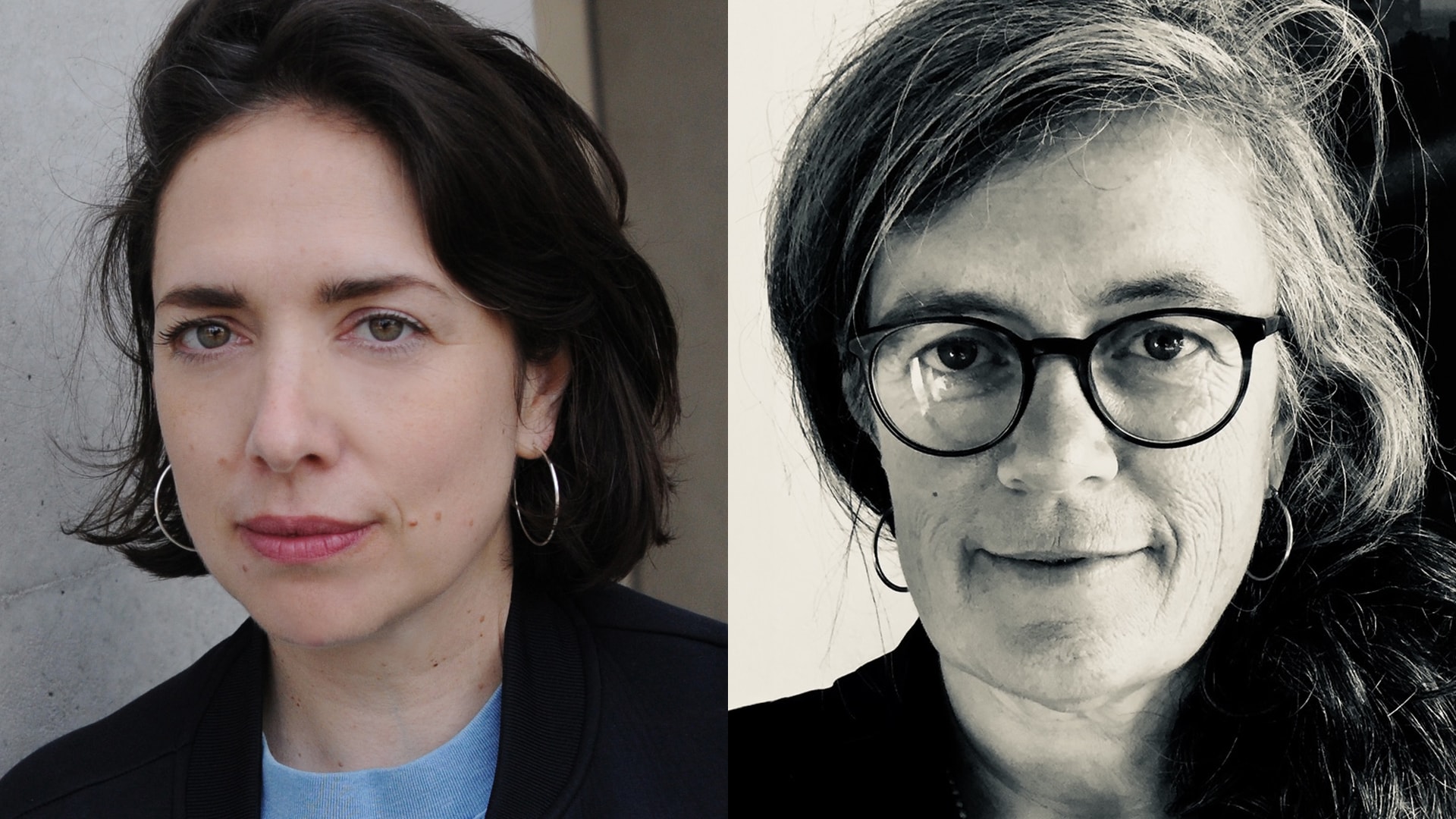


Photo Ralf Puder
Goldstück by Verena Güntner was first performed in June at the Kosmos Festival in Chemnitz as part of the programme for the 2025 Capital of Culture, and can be seen at the asphalt Festival on 14, 15, 16, 21, 22 and 23 July 2025, and at the Düsseldorf Festival on 23, 24, 27 and 28 September 2025.
Verena Güntner: In 2023, there was a femicide almost every day in Germany, twice as many as in the previous year – this was revealed in the Federal Criminal Police Office’s report on ‘Gender-specific crimes against women’ published at the end of 2024. How do you explain the massive increase in the numbers of all forms of gender-based violence?
Christina Clemm: It is not entirely accurate to say that the figures have doubled. In previous years, around 150 women were killed in their immediate social environment. The figure of 360 now also includes femicides that were not committed in the context of domestic violence. Nevertheless, it must be said that gender-based violence in the so-called known cases has increased, meaning that more cases are being reported. There are two possible explanations for this: either violence has increased or people are more willing to report it. To answer this question accurately, we would need a recent study on unreported cases, but the last Germany-wide study dates back to 2004. However, two smaller studies in North Rhine-Westphalia and Saxony suggest that the number of unreported cases has actually increased overall. If this is the case, then we have more gender-based violence.
One explanation for this is that we are living in times of crisis, with climate catastrophe, wars, a growing gap between rich and poor, and much more. Conservative and right-wing extremist movements are gaining ground and proclaiming a return to closed family structures, defensive masculinity and the fight against feminist achievements. People who are perceived as female are still heavily and increasingly regulated in public; they are expected to conform to a prescribed understanding of their role. This has an impact: we are seeing an increase in gender-based violence, but also in racist and transphobic violence.
VG: In your book Gegen Frauenhass (Against Misogyny), published in 2023, you write that you are constantly amazed at how little attention the issue receives, both politically and in the media. Even among the general public, there is almost never a noticeable outcry after such acts. Why is that?
CC: This is mainly due to the fact that gender-based violence is becoming increasingly privatised. The structural problem behind it is not recognised. That is why no one outside the region is interested when another femicide occurs. When the full extent of the violence is occasionally made public, many people are briefly shocked, but it is accepted. As if it were simply unchangeable that men beat or kill their wives. Violence against women is normalised in this way. The only explanation for this is that we live in a patriarchal system. Violence against women has a long tradition in our societies and even serves as a stabilising factor to maintain the system.
VG: In your book, you write that the most dangerous moment for the women affected is the moment of separation or the announcement of separation. What exactly happens then?
CC: For the man, the threat of separation means that he feels he is losing his claim on the woman. This can lead to men not accepting this and seeking revenge. There are many ways to do this, one of which is to kill the ex-partner. Often, however, it also happens economically, by not paying maintenance or paying it irregularly. Socially, by speaking badly about her. Threateningly, by lying in wait for her. Many women face poverty as a result of a separation, and many lose their jobs, their homes and their social environment. If there are children involved, it becomes particularly difficult, as access rights often undermine all measures to protect against violence. In most cases, no external action is taken against post-relationship violence such as stalking and death threats, even if the victim reports her ex-partner or defends herself in other ways. Some of my clients flee from one place to the next. And if they have children, it is almost impossible to go into hiding. Some leave their children behind because they are convinced that this is the only way to save their lives and those of their children.
Some femicides are committed years after the separation. A single trigger can be the deciding factor, such as when a woman asserts her financial claims in court during the divorce or posts a picture with a new partner. I have many clients who give up everything, who don’t want alimony, who withdraw criminal charges – just to avoid rekindling their ex-partner’s hatred. They just want him to forget them. Many women know how fragile their safety is from their ex-partner and how quickly everything can change again. It is therefore not surprising when women return to their violent partners. But even then, they are not safe. Some men do not kill the woman herself, but other family members, the mother, the sister, the new boyfriend, and often their own children – out of revenge. Because the man knows that this is the maximum punishment for the woman.
VG: In addition to the essential demands for sufficient places in women’s shelters, more counselling centres, comprehensive psychotherapeutic care and free access to legal representation, what social changes are necessary to curb gender-based violence in the long term?
CC: I believe we need to ask ourselves what kind of society we want to live in. One in which competition, violence and selfishness prevail, or one in which we care for one another and want a society based on solidarity among the many. A society in which we look out for one another and pay attention to what happens to others and to ourselves.
So far, we have not found any real way of dealing with perpetrators. How can we find forms of redress that also involve perpetrators, that can rehabilitate perpetrators – and, of course, how can we prevent people from becoming perpetrators in the first place? This works primarily through education – teaching children to respect others and to respect their boundaries is crucial, as is moving away from traditional role models and gender-based attributions.
In general, men should also ask themselves why they want to live in such a violent society. Why, for example, do many men find it easier to take a stand against racism than to actively oppose sexism? Questioning one’s own position of power over and over again and talking to male friends about gender-based violence would be a start.
It is about standing up for a society based on solidarity, and by that I mean not only an end to misogyny, but also, of course, an end to racism and other forms of contempt for humanity, which are intertwined.
– – –